

Study Overview
We are able to evaluate the anti-inflammatory effects of test substance on various cell types.
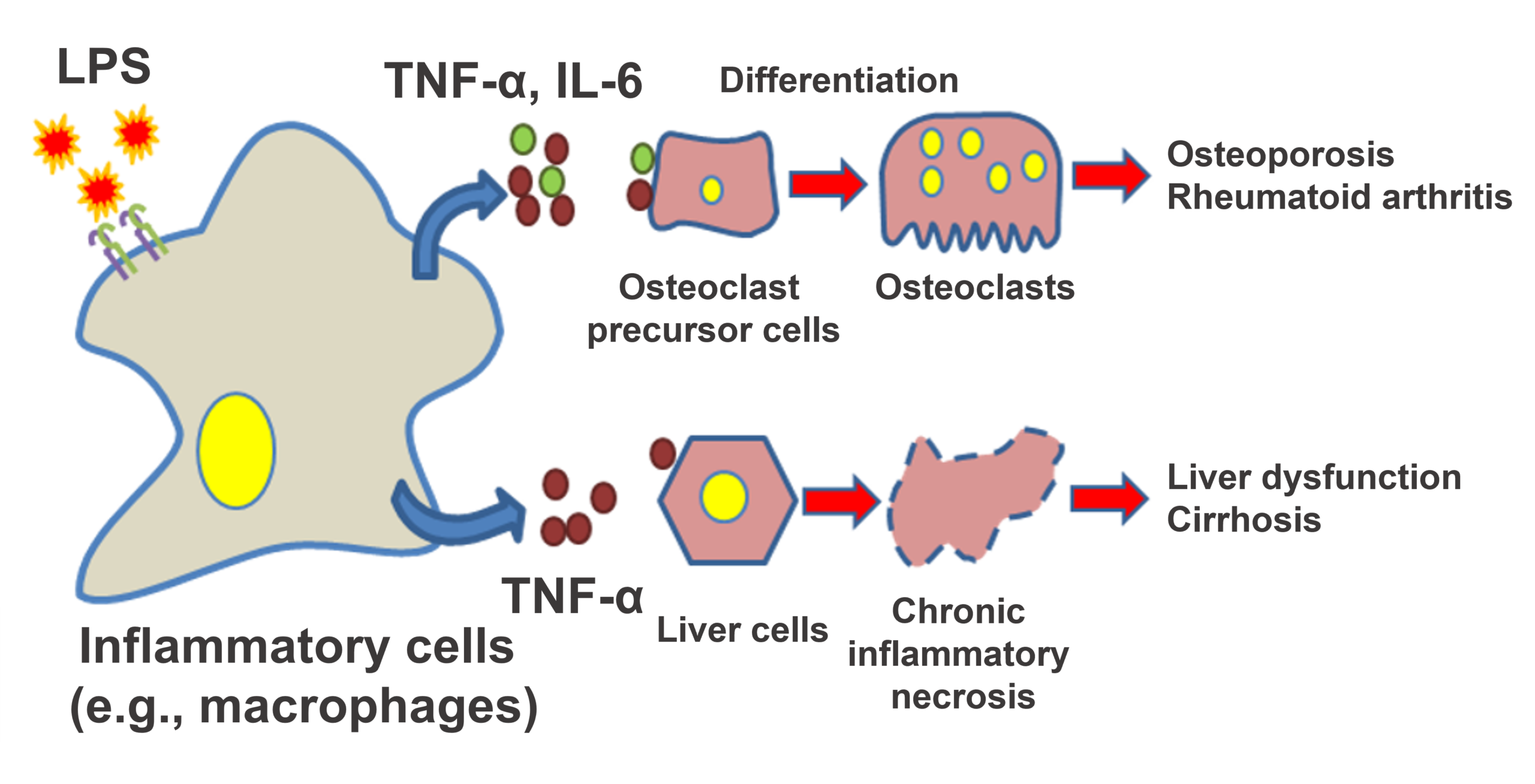
Inflammatory cells such as the J774.1 mouse-derived macrophage line, produce cytokines such as TNF-α and IL-6 in response to Lipopolysaccharide (LPS), a common substance that induces inflammation. TNF-α and IL-6 can be beneficial, by promoting the differentiation of osteoclast precursor cells into osteoclasts, but excessive production of these cytokines induces bone resorption (bone breakdown) by osteoclasts, leading to osteoporosis and rheumatoid arthritis. Additionally, TNF-α has been suggested to accelerate cellular dysfunction in hepatocytes, leading to liver cirrhosis and liver failure. As such, understanding which substances are able to suppress TNF-α and IL-6 are gaining interest for potential therapies. Below, we introduce an assay using J774.1 cells as an example to understand the anti-inflammatory effects of a test substance.-α production.
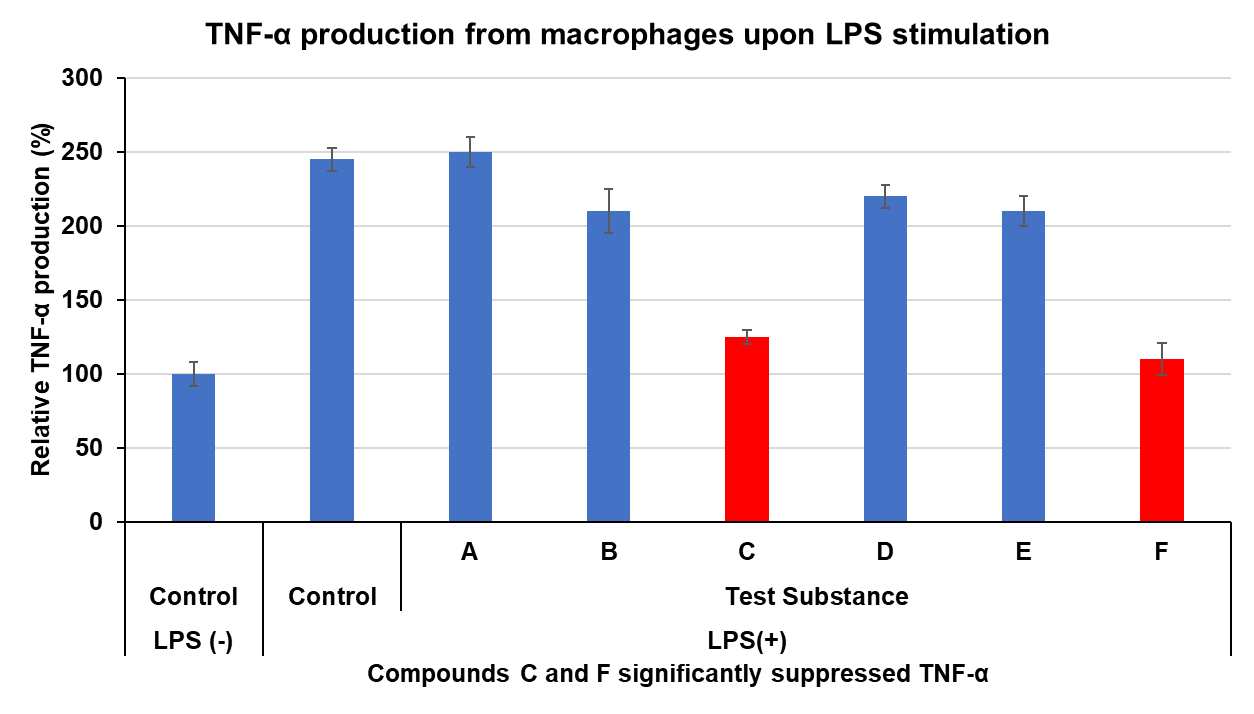
Study example
Basic Experimental design
| Cells used | Human PBMC (peripheral blood mononuclear cells) Macrophage cell lines (e.g., J774.1) Normal human epidermal cells, etc. |
|---|---|
| Measurement items | Cytokine production measurement (ELISA, multiplex measurement) |
| Preliminary study | Cytotoxicity assay |
| Main study | Measurement of cytokine production after LPS stimulation |
*All our studies are mainly performed and handled by our team of PhD scientists.