

Study Overview
Multiplex measurements allow for the simultaneous detection and quantification of multiple analytes, such as proteins or nucleic acids, within a single biological sample. This approach significantly increases throughput and efficiency compared to traditional single-analyte assays. Suspension bead array technology is a form of multiplexing that utilizes microscopic beads, or microspheres, internally dyed with distinct fluorophores to identify specific targets.
This method is ideal for studying cell-released substances, including cytokines, adipokines and myokines. We provide comprehensive support across the entire study process, from culturing immune cells (such as macrophage and human blood-derived cells) to administering test substances and measuring the resulting signals.
Equipment used
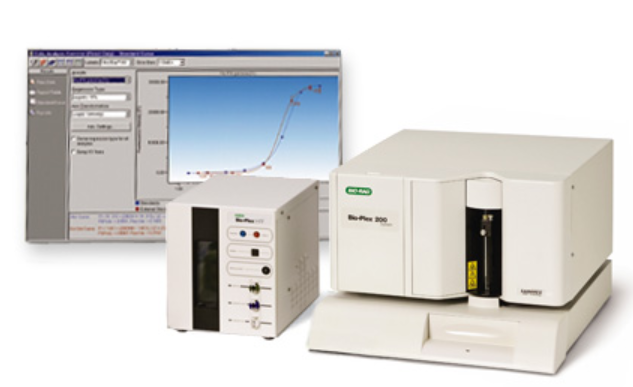
Bio-Plex 200 (Bio-Rad)
Features
In a traditional ELISA test, only one analyte can be measured at a time. If you were to measure 100 different proteins, you would need to perform 100 different tests with 100 different ELISA kits. Multiplex analysis allows for the measurement of 100 different proteins simultaneously in a single test, using a small amount of sample.
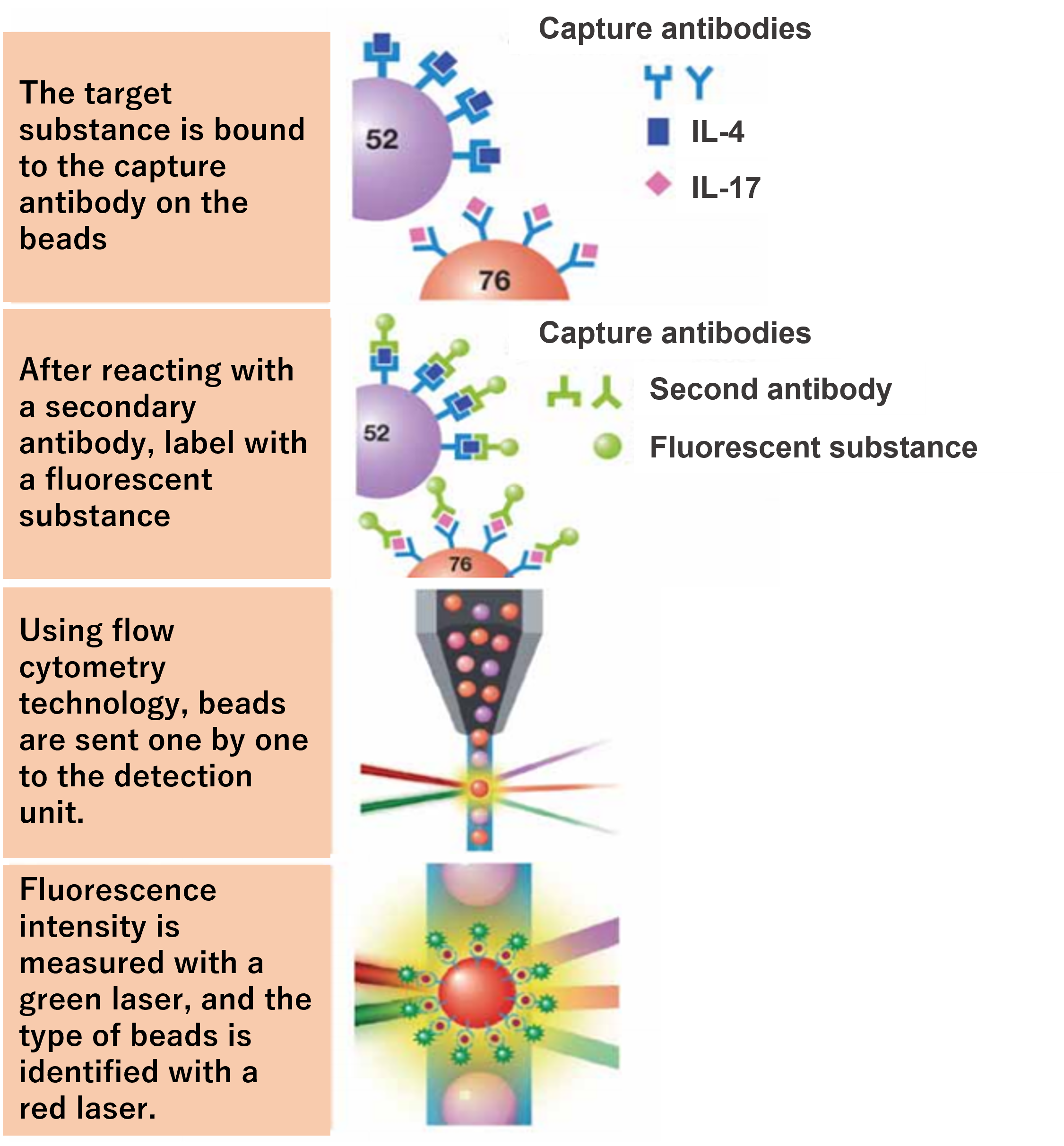
Principle
Measurement kits and items
Compatible Kit
- Bio-Rad
- Merck
- R&D systems
- Thermo Fisher Scientific
Measurable items
- Cytokines, chemokines, growth factors
- Inflammatory factors
- Factors involved in intracellular signaling (phosphorylation, apoptosis, etc.)
- Diabetes-related factors
- Isotyping
- Factors related to acute responses
- Nephrotoxicity/injury, etc.
References
The angiogenetic process as a theraputic target in cancer
Bridges EM et al., Biochem Pharmacol. 2011
Second generation multiplex immunoassays
Dale E et al., Bioradiations 2008
Regulatory T cells confer a circadian signature on inflammatory arthritis
L. E. Hand et. al., Nature Communications 2020
*All our studies are mainly performed and handled by our team of PhD scientists.