

Product Information
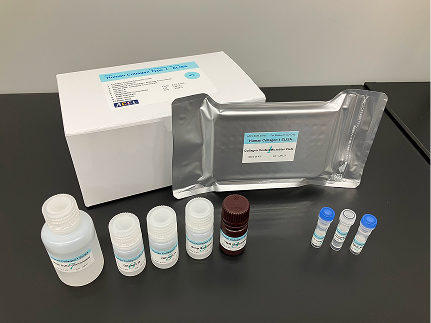
Human Collagen Type I ELISA Kit
This is an ELISA kit that allows for simple and rapid competitive measurement of native collagen. It can be used to quantify both culture supernatant and tissue homogenates.
- Human Collagen Type I ELISA (without pepsin)
Product Code: EC1-E105 - Human Collagen Type I ELISA (with pepsin)
Product Code: EC1-E205
Pepsin for Human Collagen Type I ELISA
Pepsin for human collagen type I ELISA
Used for extracellular matrix assays
- Pepsin for Human collagen Type Ⅰ ELISA kit
Product Code: EC1-E110
Product Document Download
- Human Collagen Type I ELISA (without pepsin) EC1-E105 PDF
- Human Collagen Type I ELISA (with pepsin) EC1-E205 PDF
- Pepsin for Human collagen Type I ELISA kit EC1-E110 PDF
Product Features
- Native Collagen Measurement
This ELISA kit allows for the quantification of collagen in its natural molecular structure. (For amino acid analysis, the molecular structure is broken down and the amount of hydroxyproline is measured.) - Simple
The system uses a 96-well microtiter plate, allowing for simultaneous measurement of multiple samples.
(Up to 80 samples in single replicates, 40 samples in duplicates, and 26 samples in triplicates.) - Rapid
Collagen is pre-immobilized on the plate, allowing for rapid quantification (reaction time of 2 hours and 30 minutes).
Measurement protocol
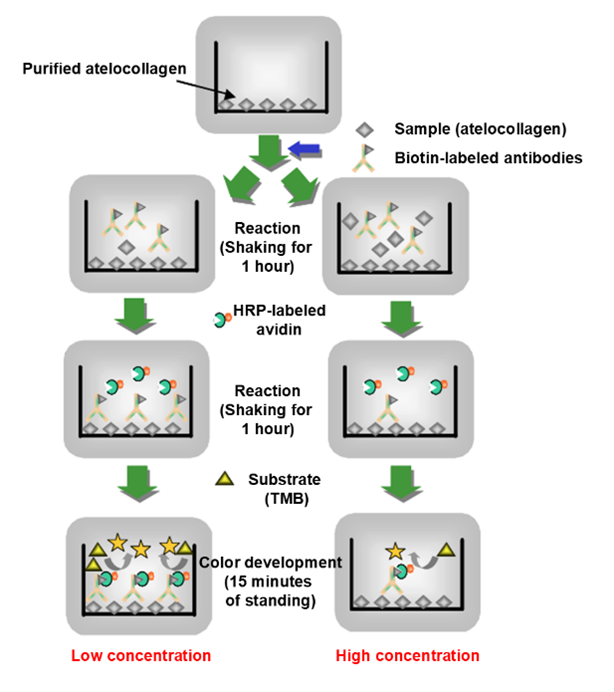
Washing of 96-well plates
↓
Add standard/sample and biotin-labeled antibody mixture
Shake at room temperature (20-28℃) for 1 hour
↓
Wash
↓
Add HRP standard avidin solution
Shake at room temperature (20-28℃) for 1 hour
↓
Wash
↓
Add color developer (TMB) solution
Leave at room temperature (20-28℃) for 15 minutes
↓
Add reaction stop solution (1N sulfuric acid)
Shake at room temperature (20-28℃) for 1 minute
↓
Absorbance measurement (450 nm)
Cross-reactivity
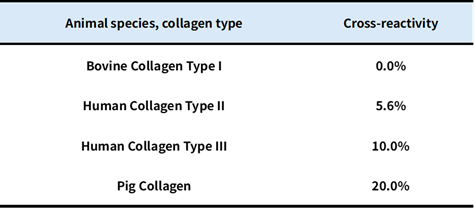
Cross-reactivity to other species and collagen types was compared to reactivity to human collagen type I (100%)
Standard curve
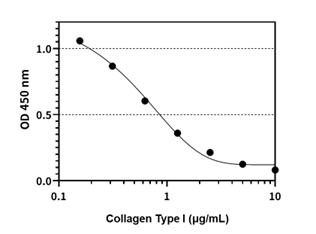
The collagen concentration in the sample was calculated based on the standard curve
(calculated using a 4-parameter logistic curve)
How to Purchase
It can be purchased from Funakoshi Co., Ltd., Cosmo Bio Co., Ltd. or Inmedium, Inc.
| Product name | Capacity | Product Code | Where to buy |
|---|---|---|---|
| Human Collagen Type I ELISA (without pepsin) | 1 kit | EC1-E105 |    |
| Human Collagen Type I ELISA (with pepsin) | 1 kit | EC1-E205 | |
| Pepsin for Human collagen Type Ⅰ ELISA kit | 500 mg | EC1-E110 | |
Frequently asked questions
References
*If you have used this kit in a paper, please inform us and share a copy of the paper with us to receive a complimentary gift.
In Vitro CO-Releasing and antioxidant properties of sulfonamide-based CAI-CORMs in a H2O2-stimulated human achilles tendon-derived cell model
Molecules 2025
Silencing of ERRα gene represses cell proliferation and induces apoptosis in human skin fibroblasts.
Molecular Medicine Reports 2024
Snail slime extracted by a cruelty free method preserves viability and controls inflammation occurrence: a focus on fibroblasts.
Molecules 2023
The open cell form of 3D-printed titanium improves osteconductive properties and adhesion behavior of dental pulp stem cells.
Materials 2021
Liposomes embedded with differentiating factors as a new strategy for enhancing DPSC osteogenic commitment.
European Cells & Materials Journal 2021
Dual acting carbon monoxide releasing molecules and carbonic anhydrase inhibitors differentially modulate inflammation in human tenocytes.
Biomedicines 2021
Bisphosfonate matrix metalloproteinase inhibitors for the treatment of periodontitis: An in vitro study.
International Journal of Molecular Medicine 2018
Intestinal myofibroblast TRPC6 channel may contribute to stenotic fibrosis in crohn’s disease.
Inflammatory Bowel Diseases 2015
Differences between protein expression and extracellular matrix state on uniaxial stretching for tenogenic differentiation.
Journal of Mechanics in Medicine and Biology 2014
Fibroblasts from the growing margin of keloid scars produce higher levels of collagen I and III compared with intralesional and extralesional sites: clinical implications for lesional site-directed therapy.
British Journal of Dermatology 2011