
Study Overview
When harmful pathogens such as bacteria and viruses enter the human body, immune cells such as macrophages sense this. This prompts a release of signalling molecules, called cytokines, that initiate the immune system response to this perceived threat. The cytokines activate immune cells such as T and B cells, that counter the infection by producing antibodies. Certain cytokines also provoke an inflammatory response in the area, promoting clearance of infected cells and accelerating metabolism in the area. In certain cases, the immune response may be extreme and cause damage to the body and cells. This is also relevant for cell therapies that can cause cytokine release syndrome (CRS), or in autoimmune diseases such as Systemic Lupus Erythematosus.
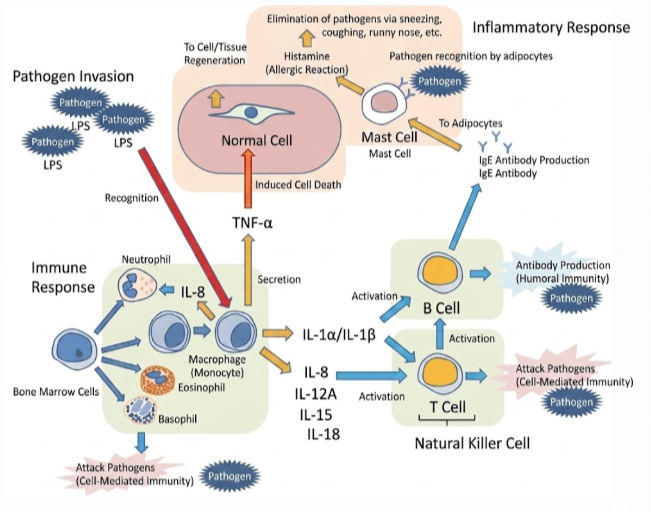
This study examines the effect of a test substance on cytokine production in macrophages. Macrophages play a central role in immune response.
Basic Experimental design
| Cells used | Human monocytic cell line (THP-1) Human PBMC, etc. |
|---|---|
| Measurement items | Cytokine production measurement (ELISA, multiplex analysis) |
| Preliminary study | Cytotoxicity assay |
| Main study | Measurement of cytokine production after Lipopolysaccharide (LPS) stimulation |
*All our studies are mainly performed and handled by our team of PhD scientists.