

Study Overview
In male pattern hair loss (Androgenetic Alopecia (AGA)), the male hormone testosterone, is converted into DHT (dihydrotestosterone). DHT binds to male hormone receptors of hair follicle papilla cells, leading to the production of hair loss factors such as DKK-1 and TGF-β. These factors cause hair matrix cells to halt hair growth, shorten the anagen phase of the hair growth cycle and causes hair to become thinner and more likely to fall out.
In this study, we evaluate whether a test substance is able to inhibit the production of hair loss factors induced by male hormones. This is generally performed in human dermal papilla cells. This study is relevant for the analysis of test substances with suspected anti-androgenic activity. For substances expected to promote hair growth, we recommend the dermal papilla cell activation study.
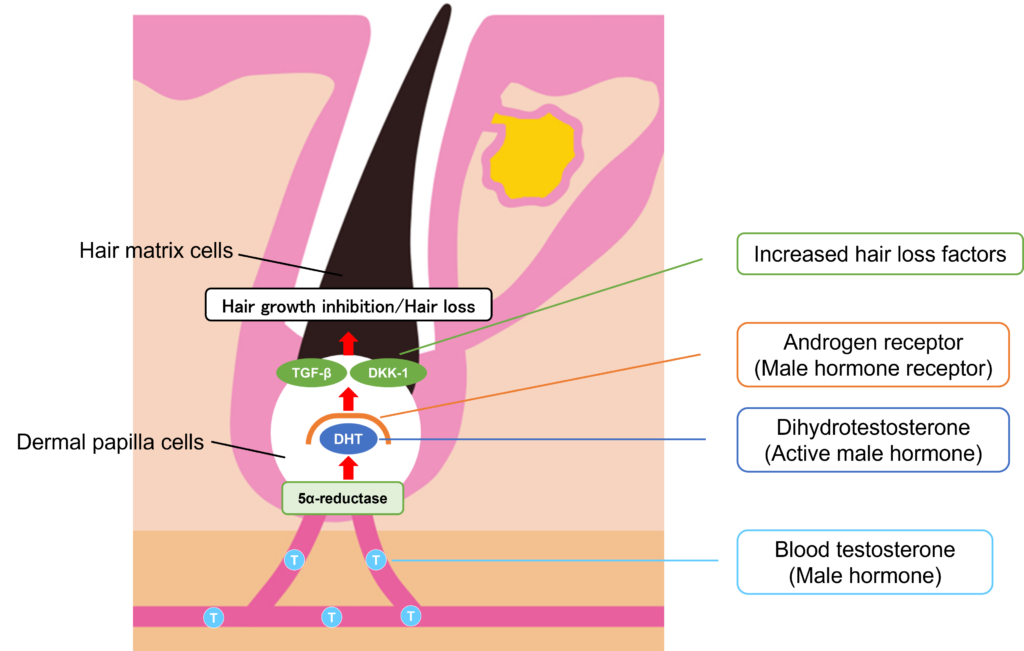
Study Example
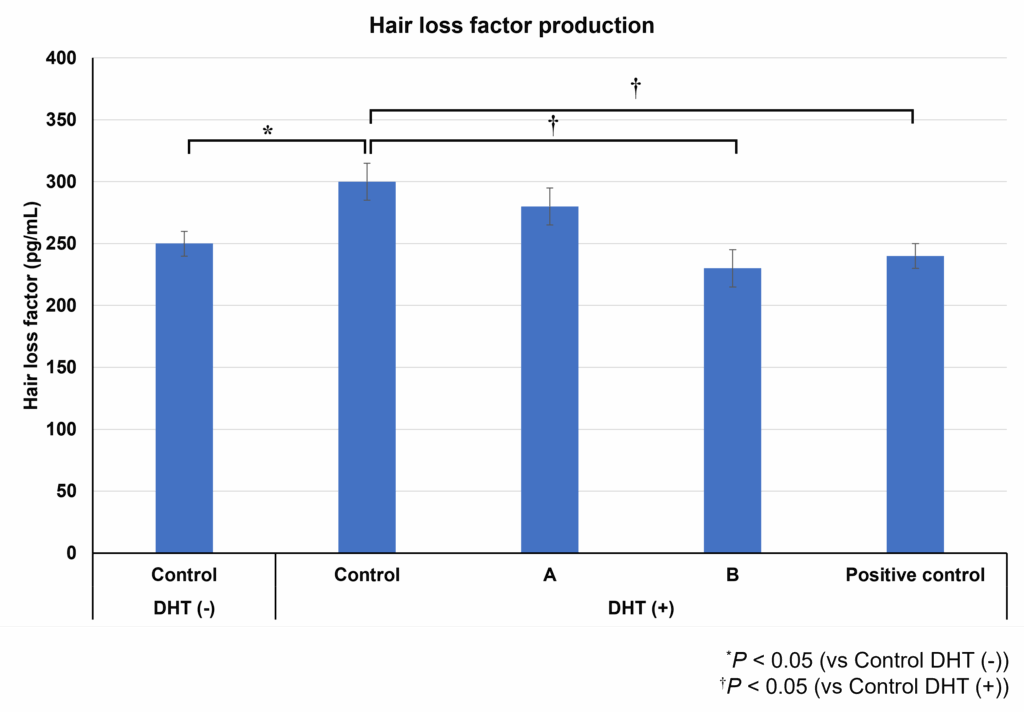
Compound B suppresses the production of hair loss factors
Basic Experimental design
| Cells used | Human hair follicle dermal papilla cells (HFDPC) |
|---|---|
| Preliminary study | Cytotoxicity assay |
| Main study | Measurement of hair loss factor production (ELISA) |
*All our studies are mainly performed and handled by our team of PhD scientists.