

Study Overview
As our bodies age or get exposed to environmental stressors, aging and cellular damage build up in the form of “senescent cells”. These cells are associated with a wide range of negative effects on health. As such, drugs selectively inducing the death of these senescent cells are gaining attention for general health and healthy aging benefits.
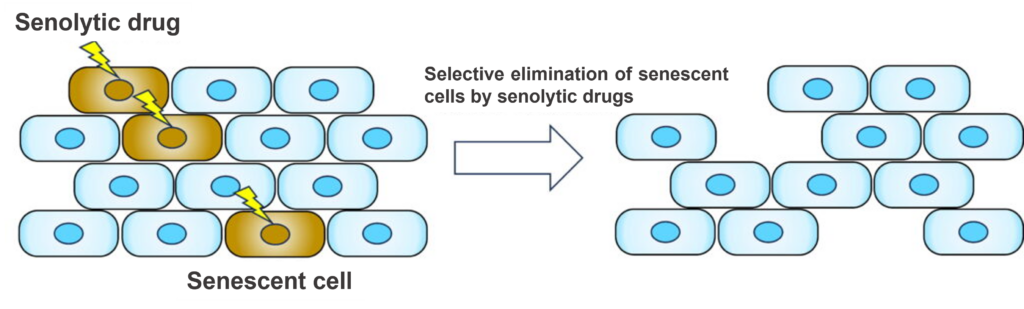
Study example
In this study comparing non-senescent cells and senescent cells, drugs were tested to identify senolytic treatments that eliminate senescent cells, while preserving non-senescent cells.
Non-senescent and senescent cells were classified based on whether they had a low or a high number of cell divisions respectively.
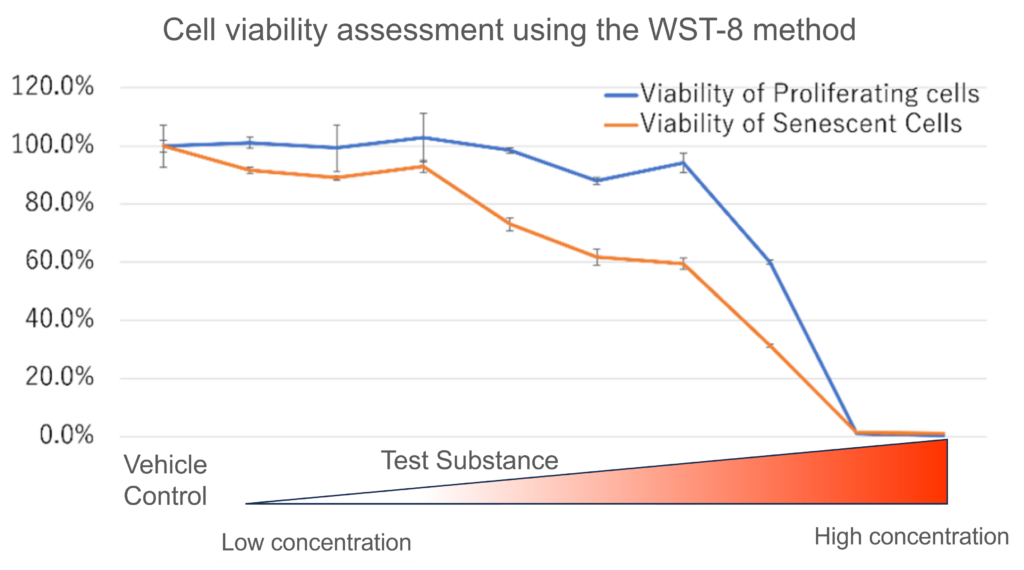
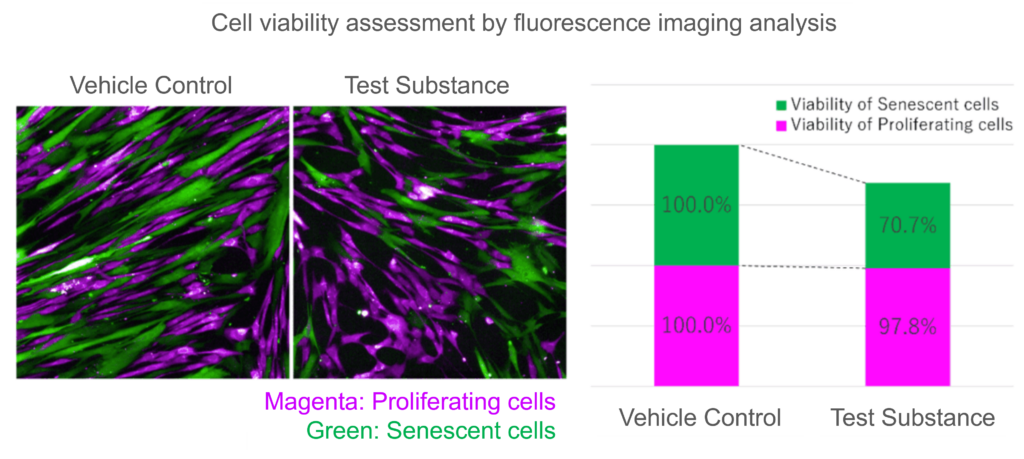
This study used the WST-8 assay, a commonly used method, in addition to fluorescence imaging, to determine the cell viability of senescent and non-senescent cells. By measuring cell viability, substances that selectively affect senescent cells can be identified.
Our approach for screening senolytic drugs allows for your desired cell line to be pre-treated to simulate cellular senescence.
Basic Experimental design
| Cells used | Human fibroblasts (passaged cells used as senescent cells) Or your desired cell line (pre-treatment with drugs to induce senescent cell-like characteristics) |
|---|---|
| Pilot study | Cytotoxicity assay |
| Main study | Using proliferating and senescent cells, -Cell viability measurement using the WST-8 method -Cell viability measurement using fluorescence imaging |
*All our studies are mainly performed and handled by our team of PhD scientists.