
Study Overview
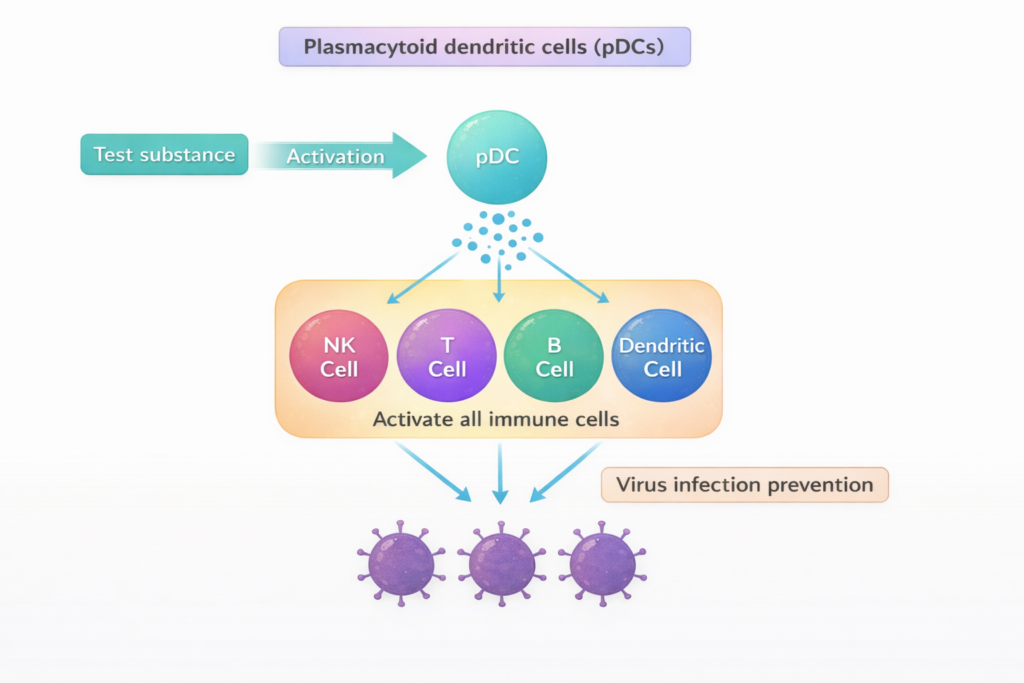
Plasmacytoid dendritic cells (pDCs) act as key regulators of the immune system by activating a diverse array of immune cells. They play a crucial role in antiviral defense through the secretion of type I interferons, a family of specialized proteins that includes IFN-α, IFN-β, IFN-ε, IFN-κ, and IFN-ω.
We screen and evaluate substances that activate pDCs using high-throughput testing, comprehensive cell-based assays, and sensitive human sample analysis. These studies determine if a substance may enhance the body’s natural defense against viral infections.
Study example
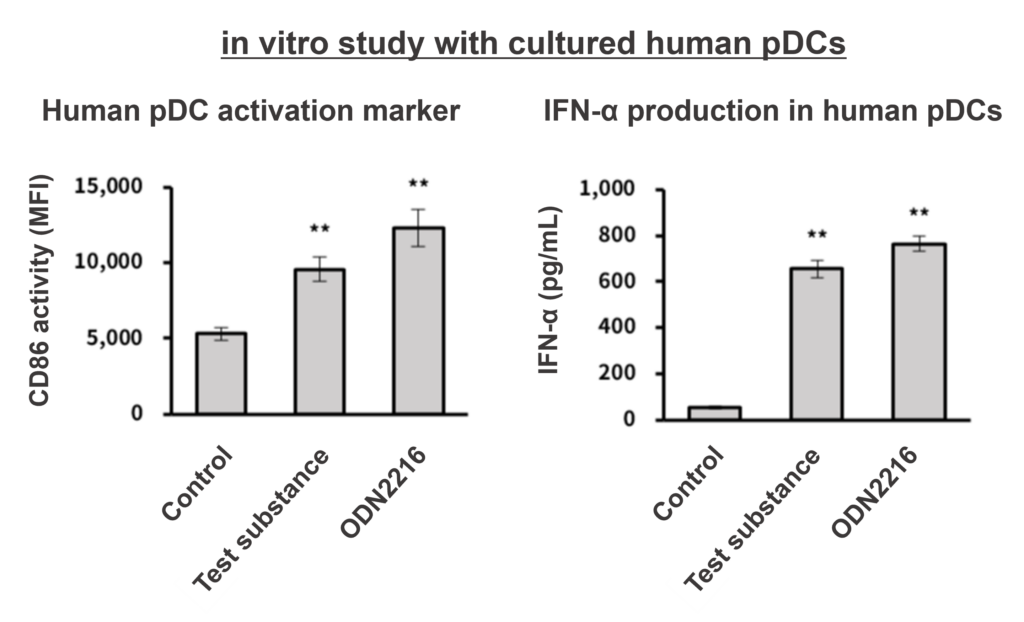
These figures showcase an in vitro study of human pDC activation (as measured by CD86 expression levels) and IFN-α production in pDCs.
As shown in the graphs, the test substance stimulates pDC activation (left) and IFN-α production (right). ODN 2216 was used as a positive control of pDC activation.
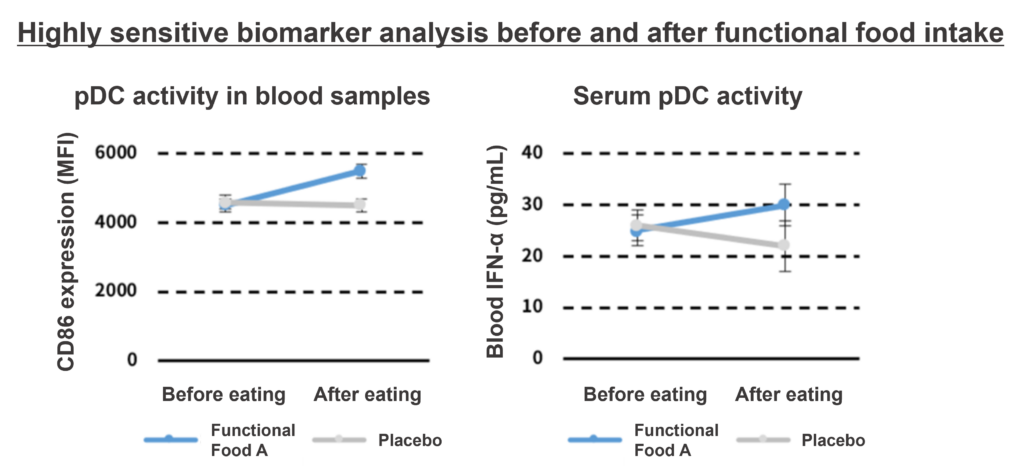
In another study analyzing human blood after functional food intake, pDC activation was observed by an upregulation of CD86 expression in pDCs (left), as well as elevated levels of IFN-α in serum (right), compared to the placebo group.
CD86 levels were measured by Flow Cytometry and IFN-α levels were measured by ELISA.
*All our studies are mainly performed and handled by our team of PhD scientists.