

Study Overview
While the bone appears inert, bone remodeling is a lifelong metabolic process where mature bone tissue is removed by osteoclasts (resorption) and replaced with new bone tissue by osteoblasts (formation). This cycle typically takes about 120 to 200 days and is essential for maintaining structural integrity, repairing micro-damage, and regulating calcium and phosphorus levels in the blood.
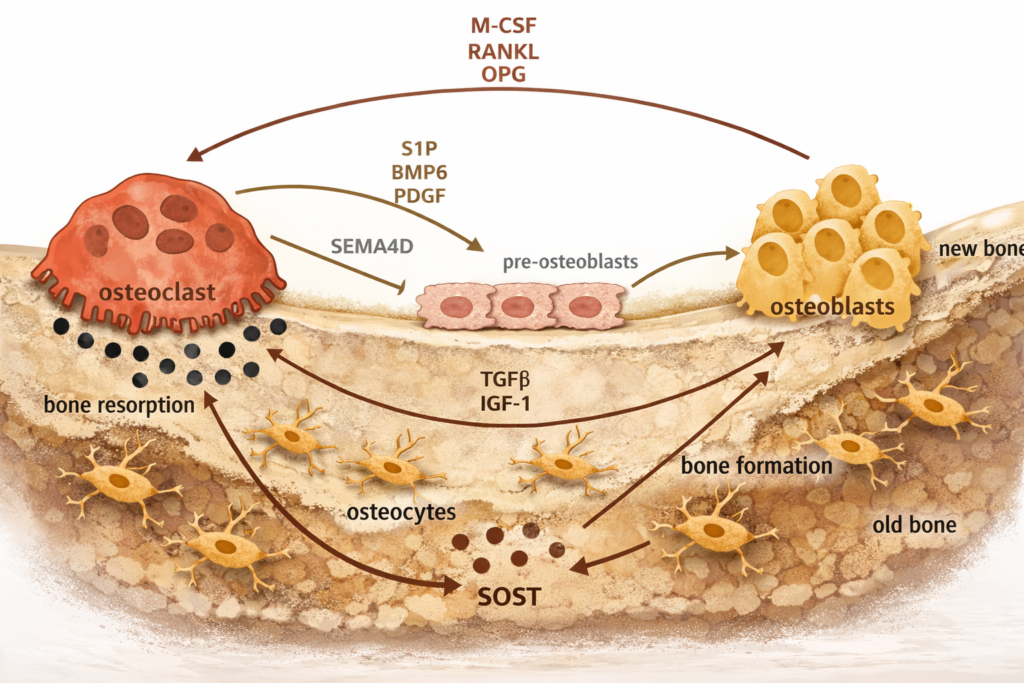
This assay determines if a test substance influences the process of resorption or formation by osteoclasts and osteoblasts. This determines if a substance can strengthen or weaken bone structure.
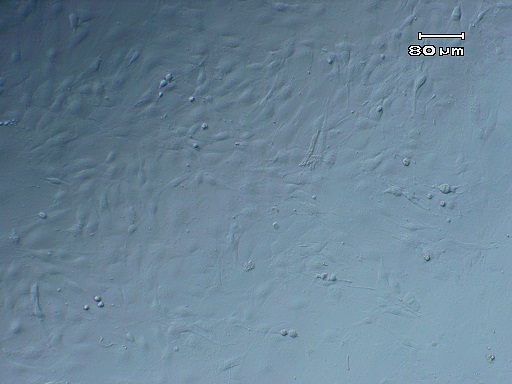
Mouse osteoblastic cell line (MC3T3-E1)
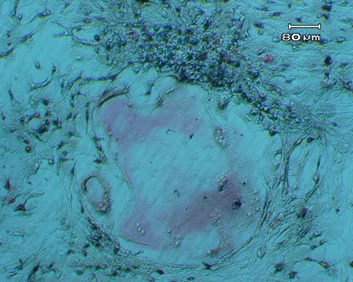
Osteoclasts differentiated from rat bone marrow cells
(TRAP staining image)
Study example
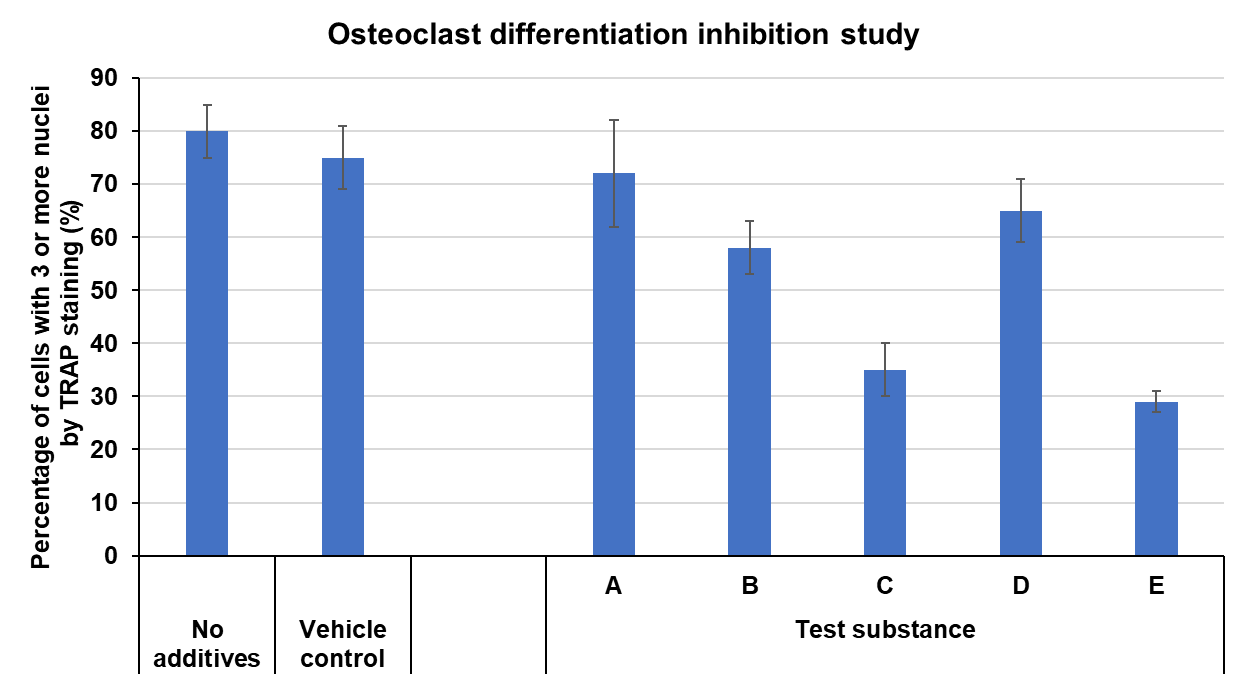
Basic Experimental design
| Cells used | Primary osteoblasts, MC3T3-E1, etc. Primary osteoclast precursor cells, Raw264.7, etc. |
|---|---|
| Preliminary study | Cytotoxicity assay |
| Main study | <Studies using osteoblasts> ・Cell activation study ・ALP activity measurement ・Osteocalcin level measurement ・Alizarin red staining, etc. <Studies using osteoclasts> ・Cell activation test ・TRAP staining, etc. |
*All our studies are mainly performed and handled by our team of PhD scientists.