

Study Overview
We have introduced the XFe96 analyzer (Agilent Technologies), which can check how cells make and use energy in real time.
1. Evaluation of mitochondrial activity
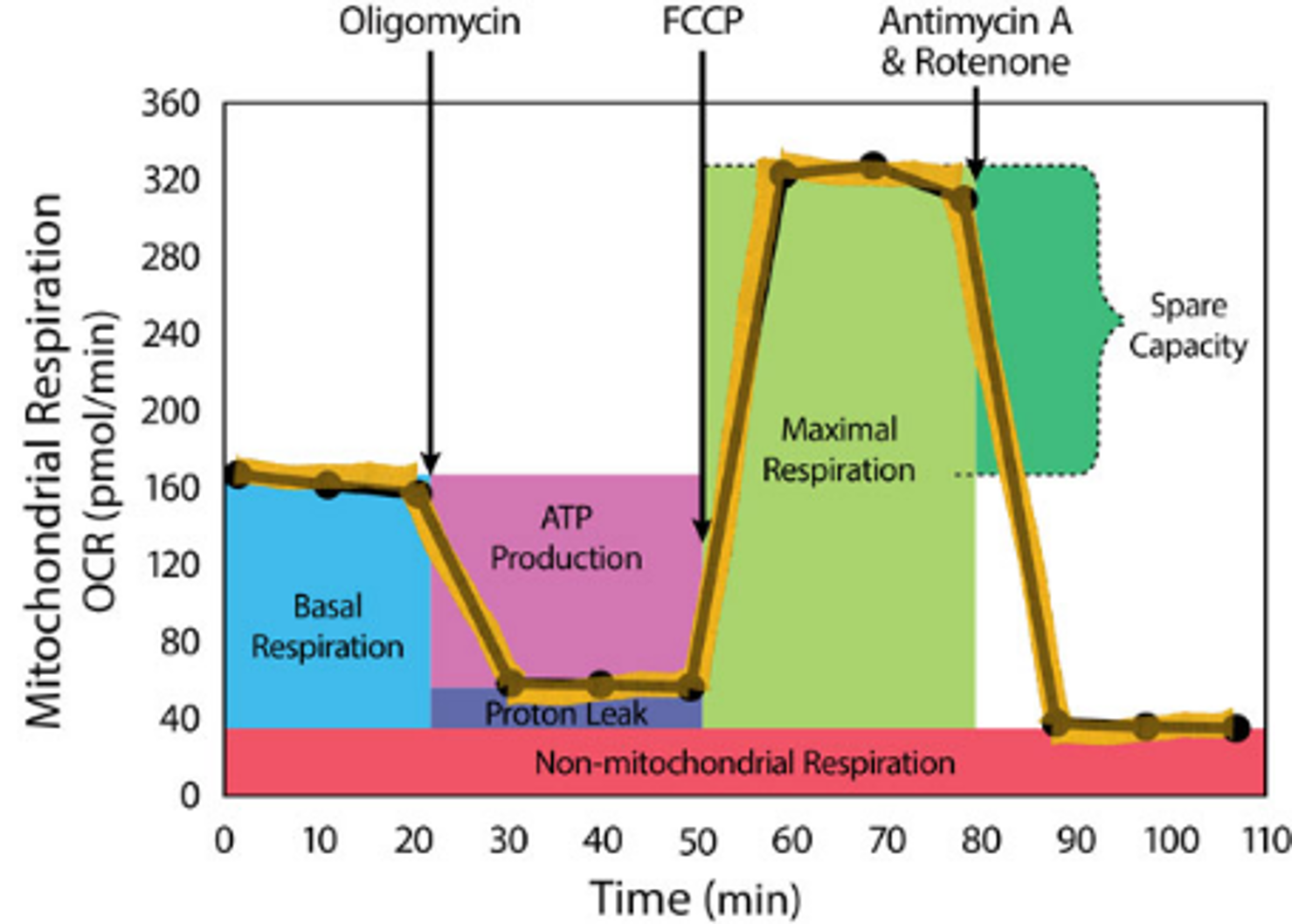
The XF Cell Mito Stress Test Kit measures important parts of mitochondrial activity, including:
・Basal Respiration
・ATP production
・Proton Leak
・Maximal Respiration (Spare Capacity)
2. Evaluation of glycolysis activity
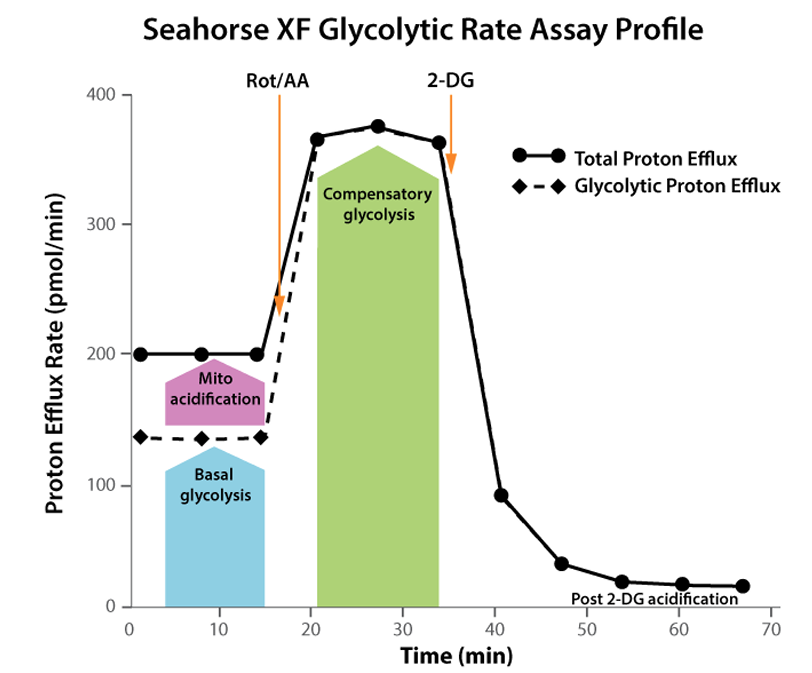
The XF Glycolytic Rate Kit measures how actively cells produce energy by breaking down glucose.
It can evaluate:
・Normal glycolysis activity
・Compensatory glycolysis (maximum rate of glycolysis when energy demands are high)
3. Evaluation of ATP production
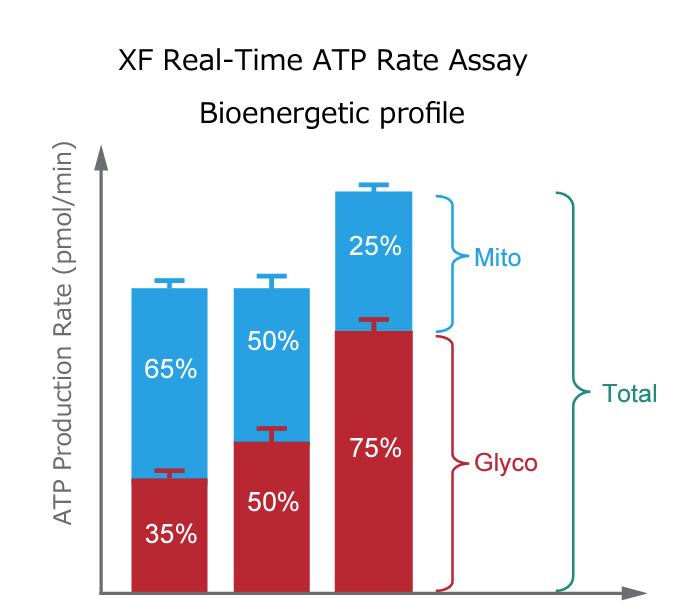
The XF Real-Time ATP Rate Kit measures:
・Total ATP production in cells
・ATP production by mitochondria
・ATP production by glycolysis
This allows us to understand how cells produce energy.
4. Evaluation of major respiratory substrate Dependency/Utilization
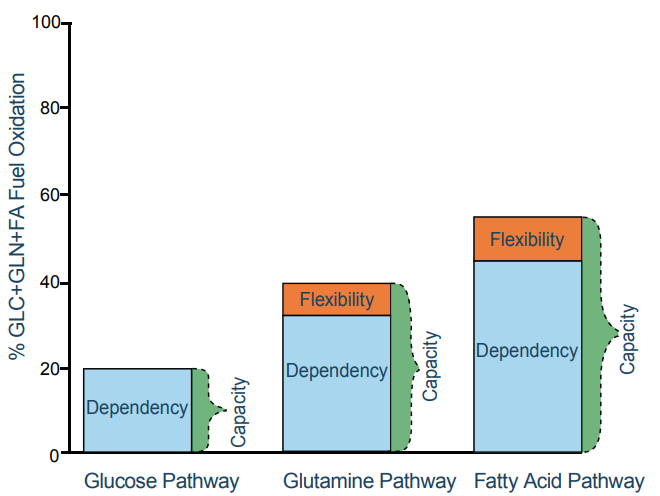
This evaluation uses the XF Mito Fuel Flex Test Kit. Analyzes the pathway dependency and utilization rates of major respiratory substrates: glucose, fatty acids, and glutamine.
Mainly measures three parameters:
・Fuel Dependency: Utilization rate of a specific substrate in the basal state
・ Fuel Flexibility: The difference between capacity and dependency
・Fuel Capacity: The ability/capacity of cells to use a specific substrate to meet energy demand
Simple explanation of terms
1. What is ATP?
Adenosine Triphosphate. Plays an essential role in the release and storage of biological energy, as well as substance metabolism and synthesis.
2. What is mitochondrial respiration?
Electrons such as NADH₂⁺ produced in the TCA cycle are transferred through oxygen molecules on the inner mitochondrial membrane (Electron Transport Chain), producing large amounts of ATP. Oxygen is consumed during this process.
3. What is glycolysis?
A metabolic pathway in which glucose taken into the cell is broken down into pyruvate in the cytoplasm to produce ATP, followed by the excretion of lactate outside the cell. Hydrogen ions derived from the excreted lactate cause the extracellular pH to become acidic.
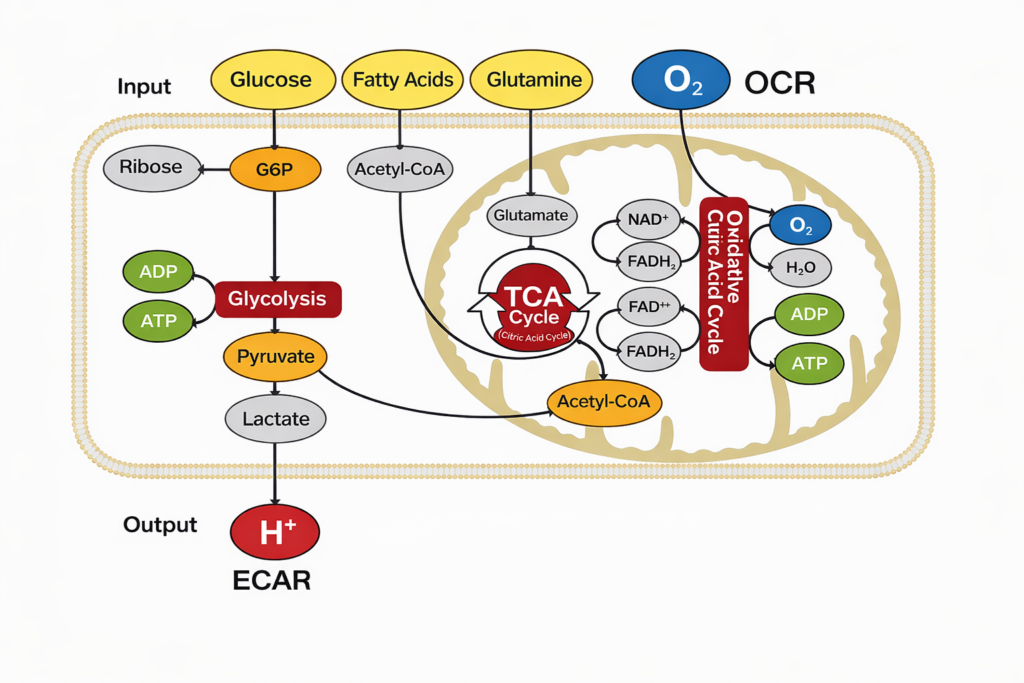
Equipment used
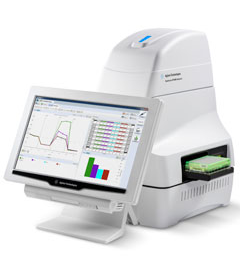
XFe96 (Agilent Technologies)
Features of the extracellular flux analyzer
■ Real-time measurement of metabolism in living cells
■ Simultaneous evaluation of mitochondrial respiration (OXPHOS) and glycolysis
■ Functional metabolic evaluation using chemical compounds
■ High-throughput
Typical analysis examples
・Cancer research
Evaluating metabolic changes characteristic of cancer cells, etc.
・Immunology Research
Evaluating pro-inflammatory and anti-inflammatory macrophages
Evaluating T cell activation, etc.
・Obesity Research
Evaluating the differentiation and function of brown and beige adipocytes
Evaluating the energy substrates used by cells, etc.
・Mitochondrial Function Assessment
Evaluation of mitochondrial function by measuring basal and maximal mitochondrial respiration, etc.
References
●Selective Cancer Therapy Effects of Vitamin C
Vitamin C selectively kills KRAS and BRAF mutant colorectal cancer cells by targeting GAPDH
Yun et al., Science. 2015
●CAR-T Cancer Treatment
Targeting REGNASE-1 programs long-lived effector T cells for cancer therapy
Wei et al., Nature. 2019
●iPSC Survival, Differentiation, and Substrate Dependence (Selectivity)
Glutamine Oxidation is indespensable for Survival of Human Pluripotent Stem Cells
Tohyama et al., Cell Metabolism. 2016
*All our studies are mainly performed and handled by our team of PhD scientists.