

Study Overview
Genes are tightly controlled by cellular mechanisms to function at the right time and are expressed at the right amounts. Expression of genes at the inappropriate time or quantity generally leads to diseases or cancer. By introducing genes into cells (Knocking-in) and inducing the overexpression of said genes, aspects of how this gene affects the behaviour or characteristics of cells can be studied. This process of incorporating and overexpressing genes into cells also allows for the creation of disease or cancer models, which can be applied to many research areas such as drug discovery screening.
We have experience with performing gene overexpression studies across many genes and we are confident we can meet your needs. Both transient and long-term stable expression systems can be produced in cells, and we are able to propose the most suitable test system for your research question. We also offer tests related to the validation and characterization of the cells that are produced through gene overexpression. (*)
*This service only involves the introduction of genes into cells and checking if the genes are expressed properly. Additional characterization studies of effects such as immortalization or disease-like characteristics can be provided separately.
Examples applications of gene overexpression:
- Gene function analysis
- Gene expression suppression by overexpression of shRNA-expressing DNA
- Cell transformation (recombinant protein-producing cells, immortalized cells, disease model cell establishment, etc.)
- Reporter assays, etc.
Transient and stable expression
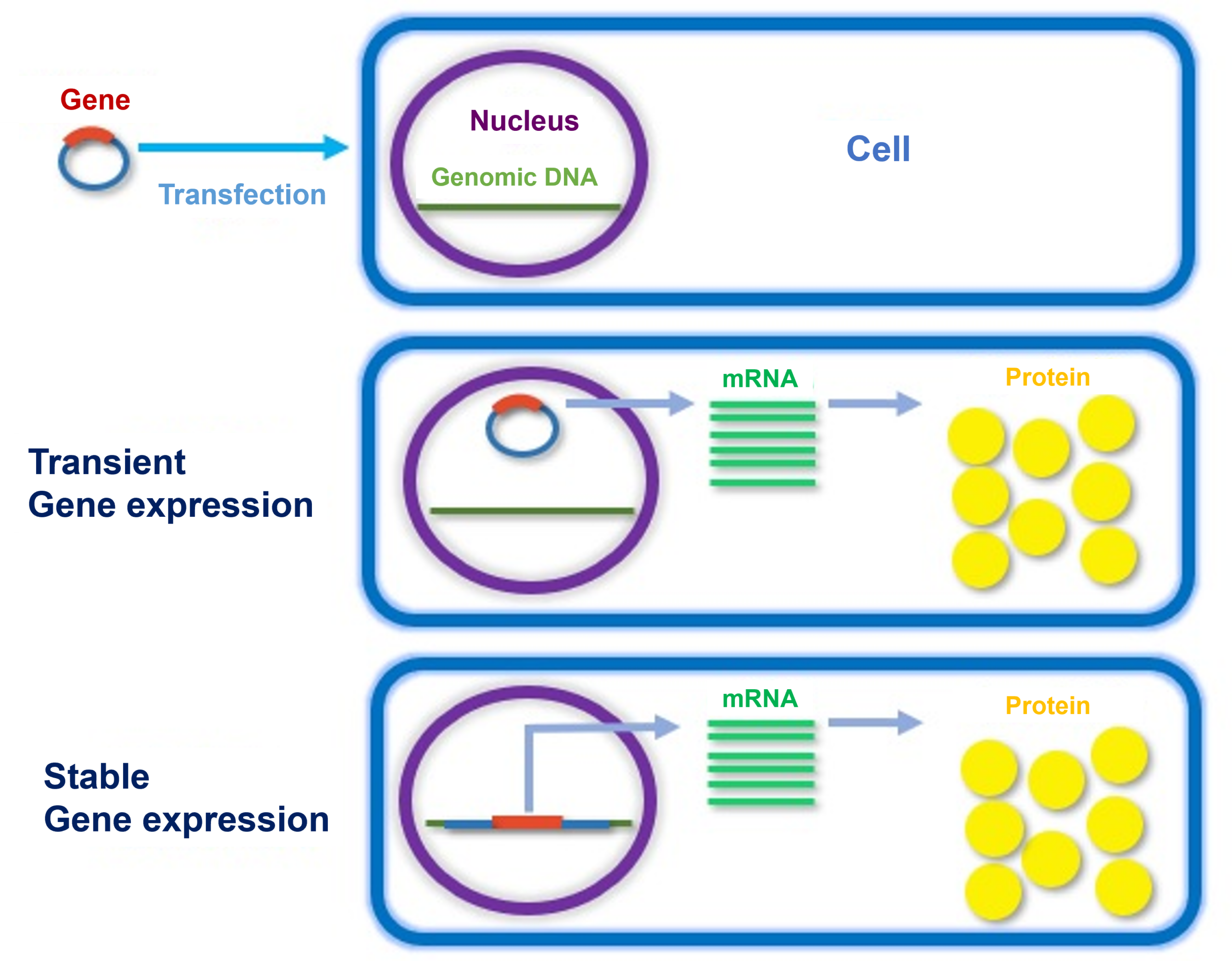
There are two main ways that genes can be incorporated into cells, as seen in the diagram above.
The first is transient expression, where the gene does not integrate into the genome of the cell. This results in lower and lower expression levels over time as the cell continues to divide. This approach is useful for studies that only require short-term gene expression, such as reporter assays or temporary gene suppression tests.
The second approach is called stable gene expression. This approach incorporates the gene directly into the genome of the cell, permanently being part of the cell’s DNA. Since the genome is preserved across cell divisions, the gene still retains its function across many rounds of cell division. This is particularly useful for producing cell lines that can express a target gene over long periods.
We are able to provide both transient and stable gene expression systems, depending on the purpose of your study.
*All our studies are mainly performed and handled by our team of PhD scientists.