

Study Overview
NADPH oxidase (NOX) is a membrane-bound enzyme complex that produces reactive oxygen species (superoxide radicals). At certain concentrations, superoxide radicals are useful for bactericidal purposes, such as the case of neutrophils fighting against bacteria. However, in excessive concentrations, this can cause oxidative stress, which is associated with arteriosclerosis, among other diseases. Therefore, substances capable of modulating the levels of NOX activity are of interest against oxidative stress.
This study evaluates if test substances are able to influence NOX activity. Since NOX activity measurement requires the enzyme complex, the crude cell fraction is used for this assay. By homogenizing tissue, it is possible to measure NOX activity.
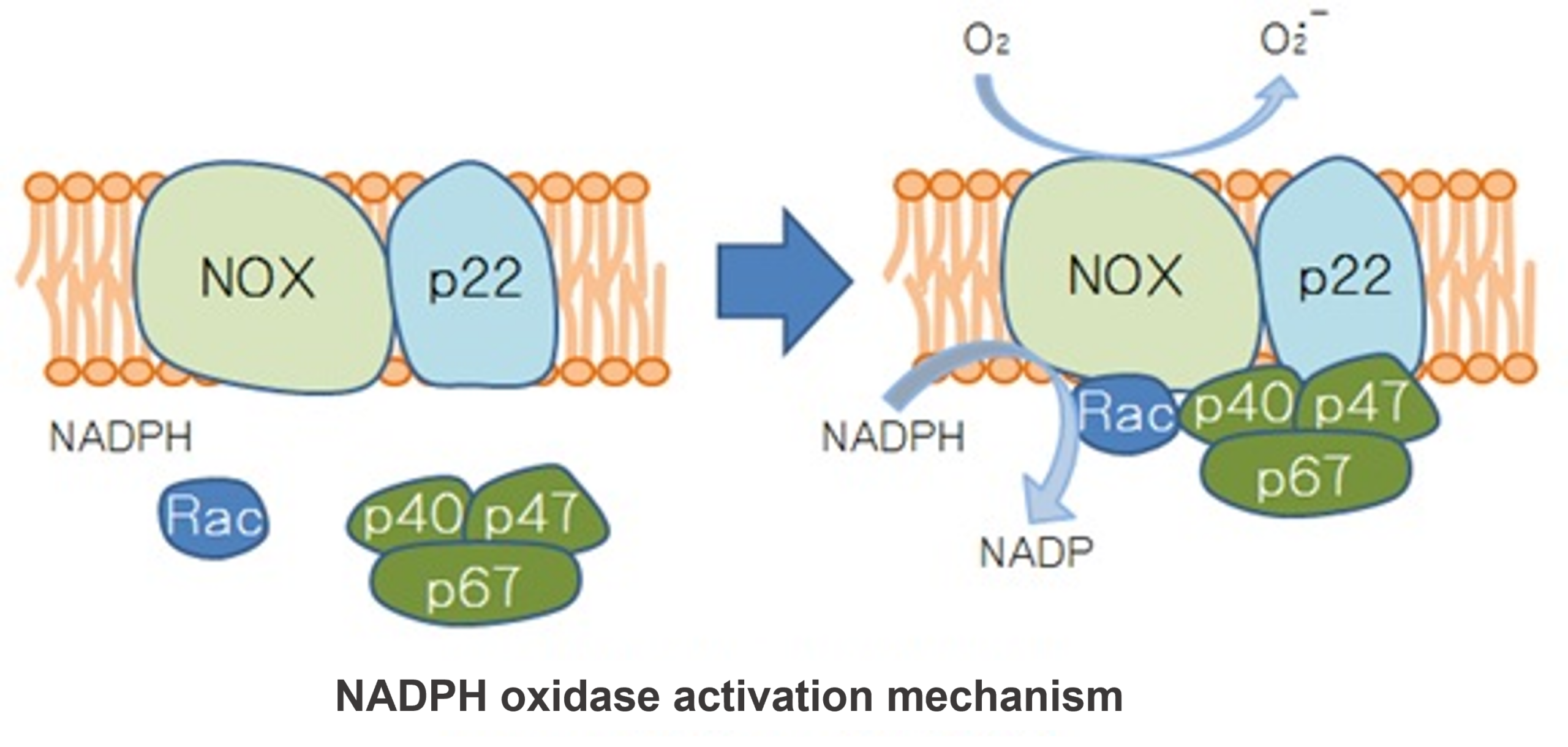
Study example
NOX activity using NADPH oxidase extracted from HUVEC
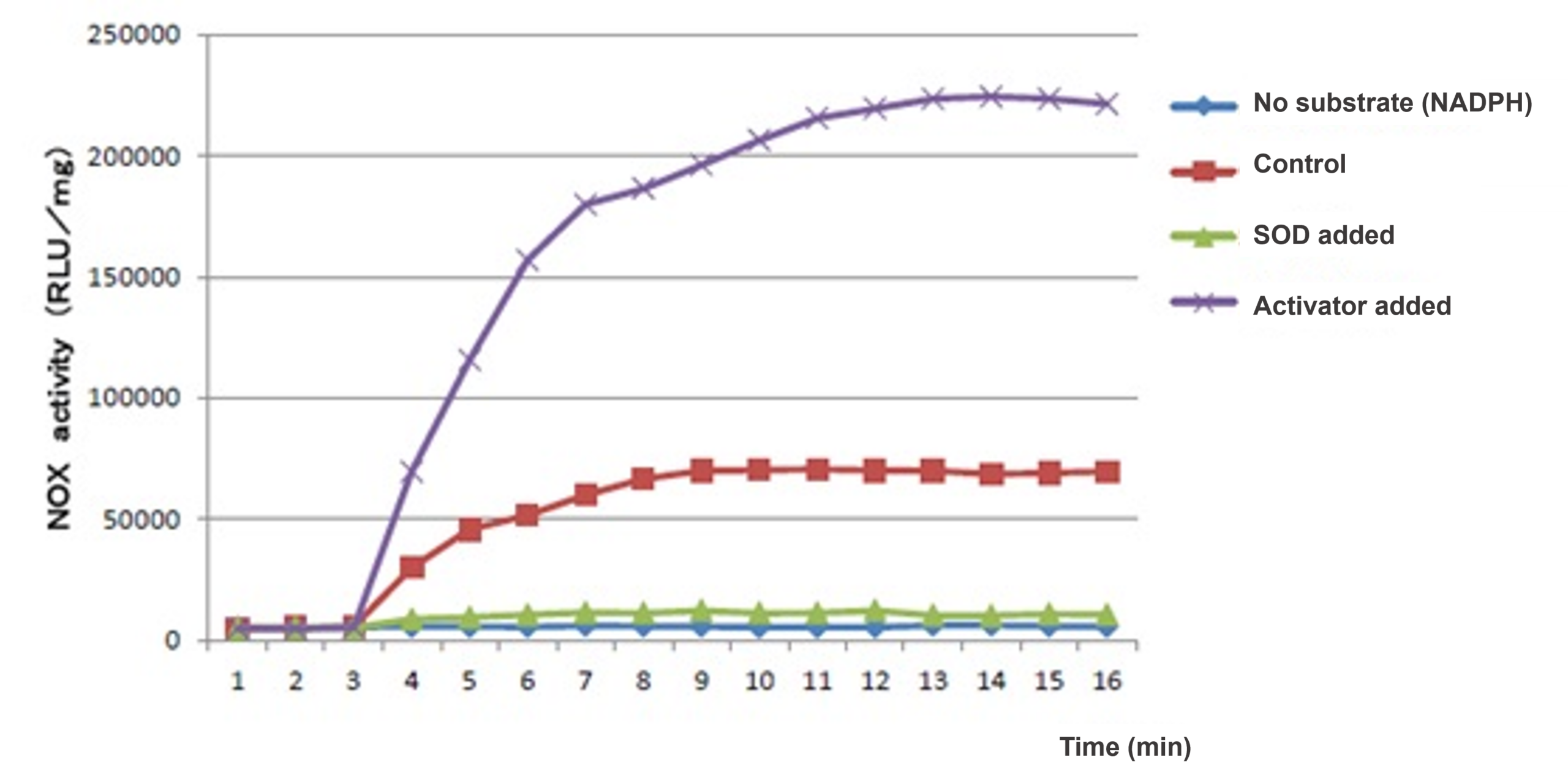
NOX activity is significantly activated by the activator (purple line) , and its activity is suppressed by adding SOD (green line), a superoxide scavenging enzyme.
Basic Experimental design
| Cells used | None (in vitro test) (Crude NOX active fractions were extracted from normal human umbilical vein endothelial cells (HUVEC) and human myeloid leukemia cells (HL-60) and used as enzyme solutions.) |
|---|---|
| Measurement items | NOX activity measurement |
*All our studies are mainly performed and handled by our team of PhD scientists.