

Study Overview
Apoptosis, also known as programmed cell death, is a phenomenon that occurs in various cells with the aim of maintaining homeostasis in the body. In the field of oncology, the ability to induce apoptosis is a key parameter for assessing the efficacy of anticancer drugs. Compounds that are able to induce apoptosis in cancer cells have the potential to become promising anticancer drugs.
This study evaluates the ability of a test substance to induce apoptosis in various cell types.The aim is to screen and discover new functional substances that are capable of inducing apoptosis.
Study example
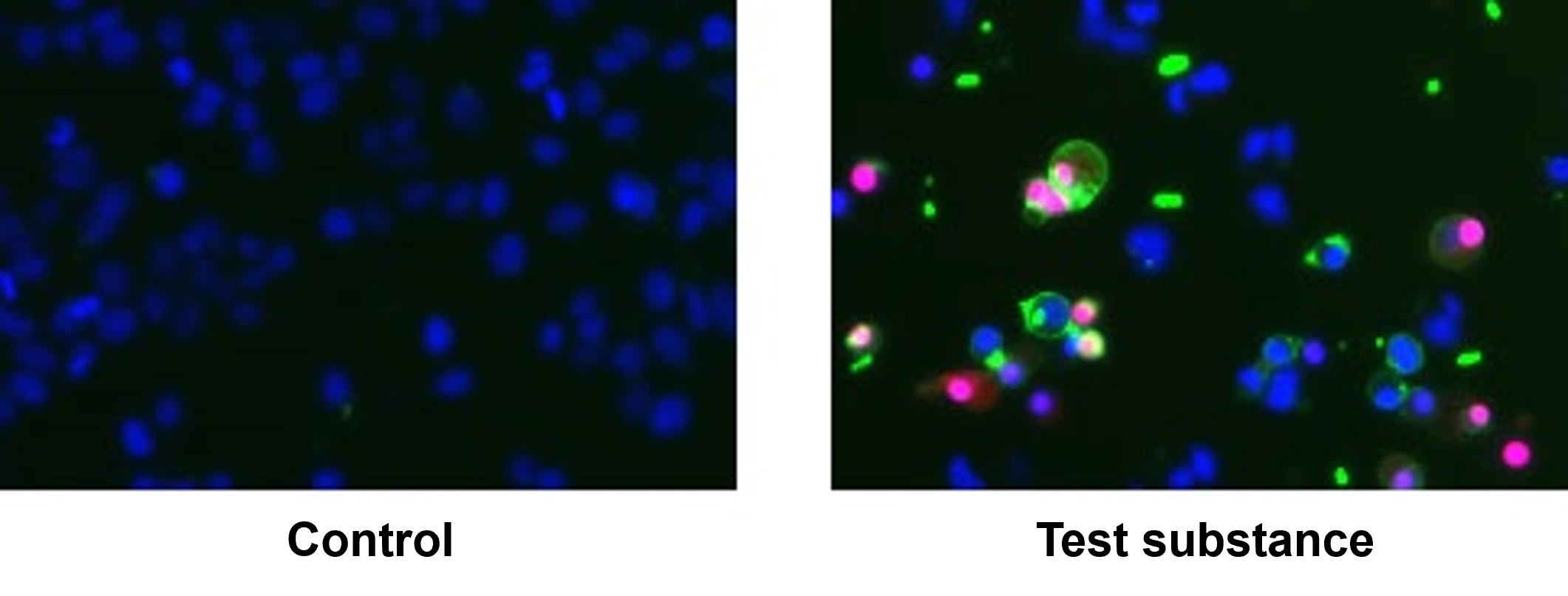
Fluorescence microscopy allows visual assessment of whether a test substance can induce apoptosis, as well as identify the stage of apoptosis.
・Early apoptosis detection: Annexin V (green)
・Late apoptosis (dead cells): PI (red)
・Nuclei (total cell count): Hoechst (blue)
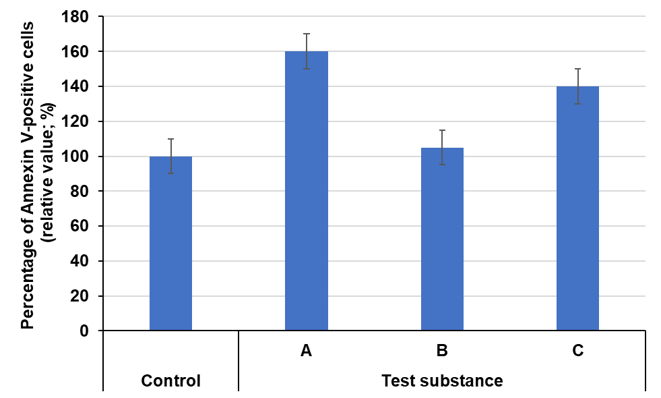
Test substances A and C showed early induction of apoptosis.
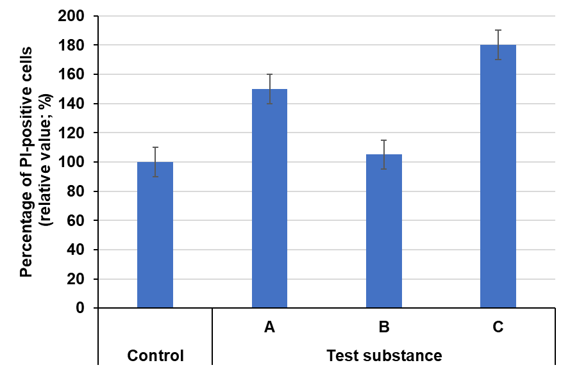
Test articles A and C also resulted in cell death.
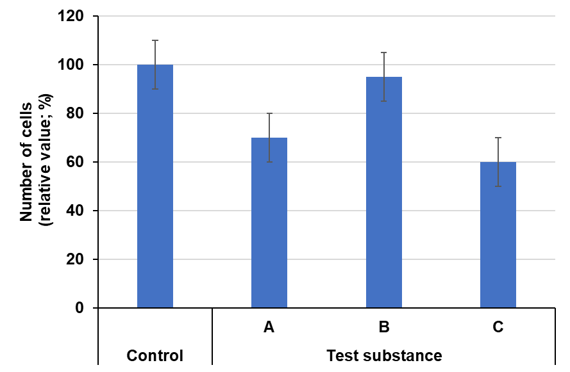
Test substances A and C reduced the total cell count.
Basic Experimental design
| Cells used | Various cells |
|---|---|
| Measurement items | Annexin V, Propidium Iodide (PI), Hoechst33342, etc. |
| Main study | Imaging using a fluorescence microscope. Measurement using a flow cytometer, plate reader, and image analysis. |
*All our studies are mainly performed and handled by our team of PhD scientists.